Tuesday, 27 December 2022

CRYPTO: The Manifest Absurdity and Danger of Proposed "Regulation"


Some Problems Can be Avoided at the Outset

This is the follow-on to my previous post today on crypto “assets”.

A look at the second and more absurd manifestation of advocating the wrong sort of regulation.

Why is regulation a “bad” idea?

First, the regulation advocated will give the appearance that “crypto” is an “asset”.

Second, it is major step in entangling our financial system in risks it would be better off avoiding. It may also be the first step on the slippery slope of governmental support/insurance for crypto.

Conveying the Appearance of Approval and thus Value

A very simple analogy.

Crypto is like patent “medicines” or illegal drugs.

Just as these are not medicines, crypto is not an asset.

An asset has inherent value. A medicine generally helps improve health.

No responsible physician nor government agency/regulator would give the appearance that patent “medicines”, miracle cures, or narcotic drugs are “good” for one’s health.

Similarly, no responsible finance professional or government agency/regulator should do the same with crypto.

Regulation can of course be of two types:

  • Prohibition 
  • Establishing standards

In the case of dangerous substances, only the first type is good.

That is the prohibition of their sale.

This will not eliminate their sale, but will limit the potential damage.

Banks and other financial institutions are not permitted to provide banking services to drug dealers. 

Investment advisors and exchanges do not list or trade in securities for these companies

Similarly, they should not be allowed to do so for crypto.

The second type of regulation advocated by some pundits is not good, because it gives an appearance of official sanction of a product.

To the best of my understanding” neither HMG or the US Government prescribe purity standards for street heroin, cocaine or crystal meth. Nor do they establish requirements for manufacturing, packaging, etc.

To do so would imply some sort of approval.

So would setting similar regulatory requirements on crypto exchanges and stablecoins.

Entangling the Financial System and Government

This is potentially the most dangerous outcome

If these imaginary assets are “validated” through regulations, then it is highly likely that our and other countries’ banks and investment companies will throw open the doors to crypto intermediaries and transactions. 

Other service providers – audit and accounting firms, law firms-- as well. 

Adding to the appearance of value.

When the gullible who have brought crypto find that their “assets” are worthless or worth less than they paid for them, it’s likely they will turn to our banks and investment companies for recompense and perhaps even to the government for failure to regulate. A potential backdoor to government support.

But there is more.

The world financial system is already freighted with enough risks.  

We don't need to pile on any more.

This is one that we can take a pass on.

CRYPTO: Keep the Faith, Baby

All Colander, No Spaghetti Monster


One might have thought that recent unraveling of the crypto-con space might have shaken faith in this imaginary “asset” class.

But alas, it has not.

Aside from the diehard crypto believers whose faith cannot be shaken, there has been what is an interesting and troubling—at least to AA—reaction among financial commentators.

Sadly even from the august salmon coloured pages of The Financial Times!!

Now pundits—even those of the financial persuasion—must “pun” on a regular basis to justify their employment.

On topics of current concern, even when they don’t really understand the basic issues involved.  

As usual, there are others--financial types, politicians, etc.--who add their voices to the mix.

Two central failures:

  • Clinging to the “sacraments” of crypto after abandoning the faith. 
  • A naive belief that imposition of certain standards on the industry via greater regulation will solve the problem.

A look at the first manifestation of this syndrome in this post.

Like the Pastafarian who loses faith in the FSM but still sports his/her colander, these pundits cling to Blockchain. And to DeFi.

Taking these in order.

Blockchain

The assumption is that Blockchain will allow the quicker and nearly frictionless completion of transactions.   

That is no doubt true for certain transactions conducted at certain volumes.  

But the overall utility may be modest like super yachts for oligarchs and the like.

However, if we are looking to process payments, a system's capacity is paramount.

  • How many transactions the system can process per unit of time. 
  • The cost of processing a transaction.

Parties interested in system economics can explore this further by looking at volume comparisons between the old and therefore presumably “bad” Visa card and the new and therefore “good” Blockchain.

Similar for average transaction costs and their variance. 

The latter of particular importance if speed is of the essence.  

And if one of the key goals is providing financial services to the "unbanked".

DeFi

According to crypto dogma, the current financial system is centralized and therefore “bad”. 

DeFi will eliminate centralization and is therefore “good”.

But like crypto, DeFi has proven to be a lot less than claimed.

It has merely replaced one set of intermediaries with another. 

And in doing so it has reduced the number of intermediaries.  

There are a lot more banks than crypto exchanges.

But some may argue that true DeFi –peer to peer transactions--can be implemented.

Let’s look at that a bit closer.

Practically how does one connect with someone to find a counterparty for one’s ”transaction”?  Generally via the internet as opposed to "in person".

I can’t think of any example of that sort of contact which does not take place through an intermediary.

Whether that’s sharing your wisdom with the rest of the world via tweets or blogposts, searching for information, looking for a rental, etc.

If you were to attempt a direct peer to peer contact without using an intermediary platform, it would be theoretically possible.  It would also be costly and time consuming.  

And you would probably not reach all the potential “peers” you wanted to reach.

That is important because you want to go where there is sufficient supply or demand to accommodate your “transactional” need as well as an infrastructure to facilitate your transaction quickly at the lowest cost. 

If you're selling 1,000 Bitcoin, Joe might buy a couple, but that would require finding a lot of other Tom's, Richard's, Harry's.  

In the next post I'll look at the second manifestation which is more dangerous and pernicious.

Twitter: Unanswered Questions & Logical Conclusions (?)

SAM's Consultant Logician Philip Francis Queeg


The press has reported that someone who is in an excellent position to know has stated that a replacement CEO for Twitter would have to be "foolish".  

I believe the exact words were "foolish enough to take the position" or some variant.

However, there was no reported assessment about the state of mind of the recent purchaser of Twitter who it would seem to me--and perhaps to you--would have a lot more at stake than a "hired hand".

Does logic, perhaps geometric logic, enable us to draw a reasonable conclusion?

As a side note, most successful businessmen and their bankers report that rigorous up front due diligence generally--but not always--leads to better decisions than that conducted after the closing.


Saturday, 13 November 2021

Monday, 4 October 2021

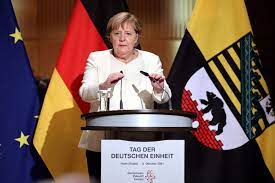
Tag der Deutschen Einheit


Much accomplished, much yet to be done.


“Wir denken selten an das, was wir haben, aber immer an das, was uns fehlt.”


Don't it always seem to go that you don't know what you've got till it's gone.

... beispielsweise


Vielen Dank, Mutti


The Sporting Equivalent of Brexit

20 years.  Finished out of the top four twice.

Friday, 17 September 2021

Dramatic Irony? The FT “Nods”

Those oft are stratagems which errors seem,
Nor is it Homer nods, but we that dream


If you read this blog, you generally detect a strong admiration for the FT.

But like Homer sometimes the FT nods.

Today’s (17 September) Lex had this bon mot to lead off its column.

China’s recent push to regulate the country’s fastest growing sectors begs the question of whether the market is still investable.

Still investable”????

Given the legal and political issues with investments in the PRC—e.g., Peking University Founder Group bonds, Evergrande Group, and stock investments via VIEs-- I’d argue there is a strong case that the PRC market was never “investable” if that term is used in a normative rather than descriptive sense.

September 13 the FT ran an article today about the crackdown of South Korea’s Financial Services Commission on digital currency exchanges in the RoK. Some US$2.6 billion in losses were expected for wise investors in this imagined asset class.

Industry data showed that digital coins other than bitcoin made up about 90 per cent of South Korean crypto trading, highlighting the market’s highly speculative nature.

Isn’t investing in sh*tcoins highly speculative regardless of their provenance?

Or in other words is jumping from the top floor of the Lotte World Tower more deadly than jumping from the top floor of the Parc 1?

I hold that statistically the results are likely to be the same.

Saturday, 14 August 2021

Happy Qi Xi Festival!


Nach all dem Weg, nach all der Zeit

Bist du die Frau in meinen Träumen

Und meine Heldin in der Wirklichkeit


Friday, 6 August 2021

The “Big Boys’ Market” VIEs—The “Myth” of Foreign “Ownership” of PRC Stocks

"Choose Your Investment Wisely
Not All Chips are Blue"


If I'm not mistaken (and as Madame Arqala could tell you, I often am), in his seminal work, Benjamin Graham made the observation above.  Along with the advice to carefully analyze a proposed investment before you commit funds. 

If you’ve been following recent financial news about the PRC government’s clampdown on private educational companies, you’ve probably seen comments about the Variable Interest Entity (VIE) structure which is typically used by companies in the PRC to access equity from foreign investors.

The VIE is used because under PRC law foreigners may NOT own stock in some sectors within the PRC.  Lots to be exact.

How does the VIE work or more accurately claim to work?

  1. A PRC company wishing to access foreign equity markets establishes an offshore company with the same name as its own. The Cayman Islands is a “favorite” location.

  2. The offshore company and the PRC-based company sign contracts that ostensibly (note that word) grant the offshore company legally enforceable rights to a share of profits of and a measure of control over the PRC company. These are portrayed as providing “the equivalent to ownership”. If you’re interested you’ll find a detailed discussion of the structure and the agreements in the two “warning” articles cited below.

  3. The offshore company then issues shares to investors. Note these are shares in the offshore company not in the PRC company.

  4. Net proceeds from the issue are upstreamed to the PRC company typically as loans in consideration for the contracts and agreements in point #2 above.

What are the issues with the structure?

  1. As with other structures based on complex legal agreements that attempt to “work around” (or perhaps more accurately circumvent) law, they are inherently fragile.

  2. The investors’ ownership rights are in the assets of the offshore company – those are solely the contracts and agreements with the PRC company—not in the assets of the PRC company. That is, the investors have no direct claim against the assets of the PRC company.

  3. To enforce their constructive (or more accurately imaginary) ownership rights in the PRC company, the investors have to enforce the underlying contracts against the assets of the PRC company.

  4. That legal action has to take place in the courts and under the laws of the jurisdiction where the PRC company holds assets. In both cases that is in the PRC.

  5. Small” problem with that. Under PRC law, foreign ownership of PRC companies is illegal.

  6. Therefore, mechanisms that attempt to “get around” PRC law—the VIE and the various contracts and agreements that purport to give the rights of ownership-- are illegal.

  7. And, thus, are not enforceable in the PRC.

This legal situation is analogous to the Peking University Founders Group offshore bonds debacle, chronicled here for Part 1 and here for Part 2

While for some time, the PRC authorities have turned a “blind” eye to the use of VIEs, that does not change the fact that these structures are illegal.

Whenever the authorities choose, they can enforce the law.

This month the PRC turned its “good” eye toward education companies. They will no longer be able to use VIEs.

That lead to a substantial drop in PRC “equities” listed on non Chinese markets.

As well as much angst among investors, some of them charter members of the “big boys” club that frankly should have known better.

The 31 July FT article Equities Watchdogs Bite. Investors Rethink China Stocks Strategy After Regulatory Shock (Harriet Agnew, Tabby Kinder and Hudson Lockett) contains a rather chilling quote.

The VIE structure, which allows global investors to get around controls on foreign ownership in some Chinese sectors, has never been legally recognised in China, despite underpinning about $2tn of investments in companies like Alibaba and Pinduoduo on US markets.” 


First, you will note that there are some US$ 2 trillion in stock investments on US markets that use the VIE structure.

Second, that suggests that the FT journalists’ reference to a “rethink” is wrong because clearly there was no “thinking” at the time of investment.

Rather it was “faith-based” investment.

To be fair, some of this amount is via passive investing by funds seeking to track various global indexes that include these companies.

I’ve always thought it was a good idea for an index to only include investable stocks.

What is distressing about all of this is the simple fact that neither the FT article nor this post constitute an “overdue wake-up call” nor a “sobering fact”.

There have been many warnings about VIEs.

Here are just two:


If you look within these two articles, you will see further warnings in the form of prior actions taken by PRC authorities against VIE structures as well as some rogue activities, e.g., T2CN and GigaMedia. Or perhaps (?) more benign – Alipay and Alibaba.

All of these “wake-up calls” and “sobering facts” were clearly ignored.

  • Over a prolonged period.

  • To the tune of US $2 trillion.

Remind me again about the efficient market theory.

Don’t forget to also mention the role of the “sophisticated” investor in the markets.

I do really love a good laugh

Wednesday, 4 August 2021

Fourplay Silverado Tokyo Jazz Festival 2020 - All Three Lead Guitarists in One Session


Fantastic set:  all three of Fourplay's lead guitarists from inception with their order of participation as follows Lee Ritneour, Larry Carlton, Chuck Loeb.

Since Chuck's death, Fourplay has been without a lead guitarist.   

In 2018, they announced a "hiatus" which seems to have been prolonged by Covid.  

Hurry Back!

Fourplay - Silverado - YouTube

From left to right:

  1. Larry Carlton next to Nathan East (bass guitar) 
  2. Chuck Loeb (RIP) 
  3. Lee Ritenour 

Tuesday, 3 August 2021

MENA IB Fees by Country - Bring Out Your LHC

Just the Equipment to Detect Small Amounts or Particles


In my previous post, I showed that MENA IB fees are pretty much a rounding error in relation to global IB fees.

I thought it would be interesting to use the estimates in the Refinitiv MENA IB reports mentioned in that post to take a look at the “major” countries in this rather “minor” total amount of fees.

Just a short technical note.

Refinitiv estimates total IB fees for a country, a regional area, and globally. 

The free reports that I am using here and in the previous post are summaries. 

Full details are available from Refinitiv for a modest fee.

I’ve prepared two tables:

  • USD amount of MENA IB fees by identified countries.

  • MENA IB fees by country as a percentage of global IB fees.


In my illustrious career on the sellside, I have worked on single transactions that generated fees equal to these yearly fees.  Often multiples.


Note that the amounts above are expressed as percentages.  The decimal equivalent of Saudi IB fees for FY 2020 is therefore 0.0030.

A stark and bleak picture.

Dreams of IB fee “riches” in Saudi or the UAE seem a rather a long distance off.

Vielleicht am Tag danach Sankt Nimmerleinstag.

For the other countries even further in the future.

MENA Investment Banking Fees Still a Sideshow

Aisle 3 for MENA IB

Back in 2017, I posted that the prospect of “rich” Saudi investment banking fees would remain a prospect not become a reality for some time. And quoted some rather minuscule numbers for KSA fees as support for that contention.

In 2018, I took a look at 2017 MENA IB fees and noted that at US$ 912 million they were an estimated 0.88% (0.0088 in decimal terms) of global IB fees of US$ 104 billion. What might be charitably described as a rounding error. 

It’s time to revisit the topic to see what’s happened since then. 

Summary

The picture above tells the story.

  1. In terms of IB fees and transactions, MENA IB remains a rounding error in the global IB market.

  2. It is not currently particularly remunerative for major global investment banks. It’s more a hobby business or “dabbling”.

Source and Technical Note

I am using Refinitiv’s (in a previous incarnation owned by Blackstone and Thomson Reuters) reports.

You can access these reports here for the price of giving them your email address and some bits of personal data.

Note that these reports are based on R’s analysis and estimates.

On the latter point, take a look at the 2019 Global IB Report, that year’s fees are some US$ 100.974 billion. In the 2020 Report, 2019 fees (the comparative figure) are USD 107.762 billion.

Due no doubt to additional data available to R.

I have estimated 2018 MENA and Global IB fees using 2019 Reports and the percent changes shown from the past year (i.e., 2019). So an estimate of an estimate.

The same with individual bank fees.

So the usual caution about the numbers in those reports and in this analysis.

While they look precise, they aren’t. More directional than locational.

Analysis

MENA IB Fees Still a Rounding Error

In the first chart, a comparison of MENA versus Global IB fees.


Small beer.

But are there IB areas where MENA fees shine?


Not really.

Relatively and charitably speaking, syndicated loans are a “brighter” spot.

But that’s not more than just saying that a 10 watt light bulb is “brighter” than a 5 watt one.

The MENA IB landscape reflects

  • the state sector’s dominant role in regional economies – a sector that has both economic and non economic drivers, with the latter often being more important in motivating corporate actions than the former

  • a generally risk adverse rentier/comprador mentality in the private sector

The results are

  • a greater orientation to debt (syndicated loans and DCM) than equity (ECM)

  • a limited market for corporate control (M&A)

  • the state sector’s ability to command low fees

The above are broad generalizations. One could respond that these conditions exist in other markets.

Indeed!

But in the most significant markets there are sufficient other customers to generate transaction volume at relatively higher fees.

In MENA this is not the case.


Importance of the MENA Market to Global Banks

In regard to Global M&A MENA is a small fish.

Clearly, for regional banks it is an important market not only because it is part of their natural market, but also because the fees represent significant earnings.

But what about the big boys?

I’ve selected four global banks based on their consistent position at the top of Refinitiv’s MENA IB fee tables.

Three of the banks typically are also in the five top positions in the Refinitiv’s Global IB tables. They are JPMC and Goldman Sachs who generally trade places in the top two slots Citi which is typically in the top five.

The final bank, HSBC, is typically in the third tier global position: ranking eleven to fifteen. Within MENA it has a stronger position. most often in the first position.


From the charts above, it’s clear that MENA is a hobby business for these banks.

HSBC as a third tier IB is no doubt happy to take IB fees wherever it can.

In my two earlier posts, I mentioned the drivers of IB participation in a market:

  • Fees – Not only for the IB and its bankers’ remuneration but also as a “marker” of IB prowess in sales pitches.

  • Transaction Volume – A similar market prowess badge for one’s pitchbook.

  • Market Development – The hope that today’s loss leader will lead to a higher volume of higher priced transactions. Dream on in MENA.

  • Global Positioning – Using transaction expertise/presence in one market with clients from another.

    • We are a global firm with experience and knowledge across the globe”.

    • We can help you in the UAE, KSA, etc.”

  • Inward Marketing – Using one’s position in a market to sell product (debt, equity, etc) into that market.  

These factors probably explain the continuance of the MENA hobby.

Saturday, 24 July 2021

Estimate of Tesla’s Bitcoin Holding and Analysis of 1Q2021 Bitcoin Sale

AA Uses Only the Most Accurate Equipment
for His Estimates

I thought I’d throw my chapeau into the ring of those analyzing Tesla’s Bitcoin Holdings.

And then for good measure provide my own analysis of the 1Q sale.

Summary

  • Numbers of BTC and original costs are estimates.

  • Tesla originally purchased BTC 46,561.73 at an average original cost of US$ 32,215.30 per “coin”. (My Scenario #2).

  • Using averages of my Scenario #1 and #2, in March it sold 4,466.64 BTC at an average price of US$ 60,895.95 per coin.

  • As of 31 March Tesla held BTC 42,901.81 at an average cost of US$ 31,621.36 per coin.

  • Under US accounting “rules” once Tesla takes an “impairment” on its BTC holdings, it cannot reverse it if fair value increases later. The only way to “capture” the increase is to sell BTC in which case the higher fair value over carrying cost is a component of net profit.

  • Because of these accounting “wrinkles”

    • Tesla may have an economic incentive to support BTC’s price because impairments flow through the income statement.

    • Or to sell BTC to generate a profit to offset impairment charges.


Introductory Comments

Don’t be followed by the apparent precision in my numbers below.

There isn’t sufficient information to achieve precision.

So my numbers and those of others cited below can only be rough estimates.

You’ll find those other estimates here and you can compare methodology and results.

First up is Shawn Tully at Fortune: 38,300 BTC held at 31 March 2021.

Second is Chuck Jones at Forbes: 42,902 BTC held.

I’ll be using Tesla’s 1Q2021 10Q as the source document for data.

If you’re interested in the US accounting treatment for digital assets, here’s a link to an AICPA publication on ASC-350.


What are Tesla’s BTC Holdings as of 31 March 2021?

From Note 3 in Tesla’s 10Q the fair market value of their BTC as of 31 March 2021 is some US$ 2.48 billion.

Using Yahoo Finance data, the closing price of BTC on 31 March was US$ 58,918.83.

That equals BTC 42,901.81. US$2.48 billion divided by US$ 58,918.83.

That number is in agreement with Chuck Jones’ calculation.

Shawn’s number differs because he’s using a profit of US$ 101 million on the March BTC sale, due to his including the US$ 27 million impairment as a component of the sales proceeds. Therefore, his cost of sale is US$ 171 million not US$ 144 million.

By my calculation the carrying value of Tesla’s BTC portfolio is US$ 31,621.36 as of 31 March 2021. US$1.331 billion divided by 42,091.81 coins.

But that is an adjusted cost after the US$ 27 million impairment. (Also disclosed in Note 3).

First cut.

To determine the original purchase price of the remaining BTC we have to add back the US$ 27 million impairment charge. That means the original cost of the Bitcoin remaining after the March 2021 sale but before impairment is actually US$ 1.358 billion.

Note the implicit assumption that the impairment was taken after the March sale.

On this basis the historic cost per Bitcoin is US$ 32, 262.81.

But another wrinkle.

As Shawn Tully points out, reconciling the balance of the BTC holdings results in a US$ 2 million difference.

That is, Tesla purchased US$ 1.5 billion sometime between 1 January 2021 and early February. The last purchase would have had to occurred some time prior to 8 February.

Why?

Tesla first announced the purchase in its 2020 10-K which is dated 8 February.

As per note #3 in Tesla’s 10Q Tesla recognized gains of US$ 128 million on the BTC sale and took a US$ 27 million impairment.

As per my understanding of the required accounting, the impairment is unrelated to the sale.

From the Consolidated Statement of Cash Flows, we see that Tesla received proceeds of US$ 272 million from the BTC sale. If the recognized gain on the sale was US$ 128 million, then the cost of the BTC must be US$ 144 million.

(Note that is 9.6% of the original purchase amount and would seem confirm Tesla’s 1Q statements that it sold 10% of its original holding)

US$ 144 million plus US$ 27 million equals an expected US$ 171 million decrease in the balance of BTC from first purchase through 31 March 2021

But that amount is US$ 2 million more than the net change in BTC holdings—US$ 169 million.

Is this due to rounding? Or to vehicle purchases using BTC? Or a combination of both?

We don’t know.  Sadly, a question that might have shed light on this issue was not selected for the Q&A on Tesla's 1Q Call.

We also don’t know what the US$ 27 million impairment charge relates to.

Is it the original BTC purchase? Or BTC received for car purchases? Or both? Or something else?

Scenario #1

If we assume there were no material car purchases with BTC and use the US$ 1.358 billion figure above, the original historic purchase cost per “coin” is US$ 32,262.81.

Tesla would have had to sell 4,463.34 BTC to equal the US$ 144 million cost of BTC sold in March.

The original number of BTC bought would then be 46,555.15

You’ll notice this equals US$ 1.502 billion at the estimated historic cost above. Thus it includes the unexplained US$ 2 million “difference”

Scenario #2

Same assumptions as Scenario #1, but US$ 2 million assumed rounding differences is excluded. The original cost of the BTC purchase is US$ 1.356 billion. That gives an original purchase cost of US$ 32,215.30 per “coin”.

In this case Tesla sold some 4,469.93 BTC.

Under this second scenario, it would have originally bought 46,561.73 BTC


Key Accounting Considerations

Under ASC-350 and ASC-820, once fair value is lower than carrying value, Tesla must make a one way adjustment in carrying value via an impairment charge.

If fair value later increases, the impairment can not be reversed. (Question #6 pages 6-7 in the AICPA publication linked above)

However, on sale of BTC in the future, the difference between carrying value (reflecting any impairments) and sale proceeds will be recognized as “profit”. 

Thus, if fair market value has increased but not carrying cost, Tesla would recapture the difference between FMV and carrying cost in additional profit on the sale.


Implications of Accounting Rules

It would be interesting to see if Tesla or any of its senior officers announce BTC initiatives or tout BTC when the price of BTC appears in “danger” of declining below the carrying value in Tesla’s financials: US$ 31,621.36 as of 31 March 2021.

It will also be interesting to see if Tesla conducts any additional sales to offset any future impairments.


March 2021 BTC Sale

The Scenario #1 and Scenario #2 estimates for the number of BTC sold are very close. So let’s use the arithmetic average of both. That’s 4,466.64.

Using this number, the average price received on the March sale was roughly US$ 60,895.95. US$ 272 million divided by 4,466.64.

If you look at the Yahoo Finance historic prices for BTC, you’ll see several days that might be candidates for a sale, e.g. March 14th.